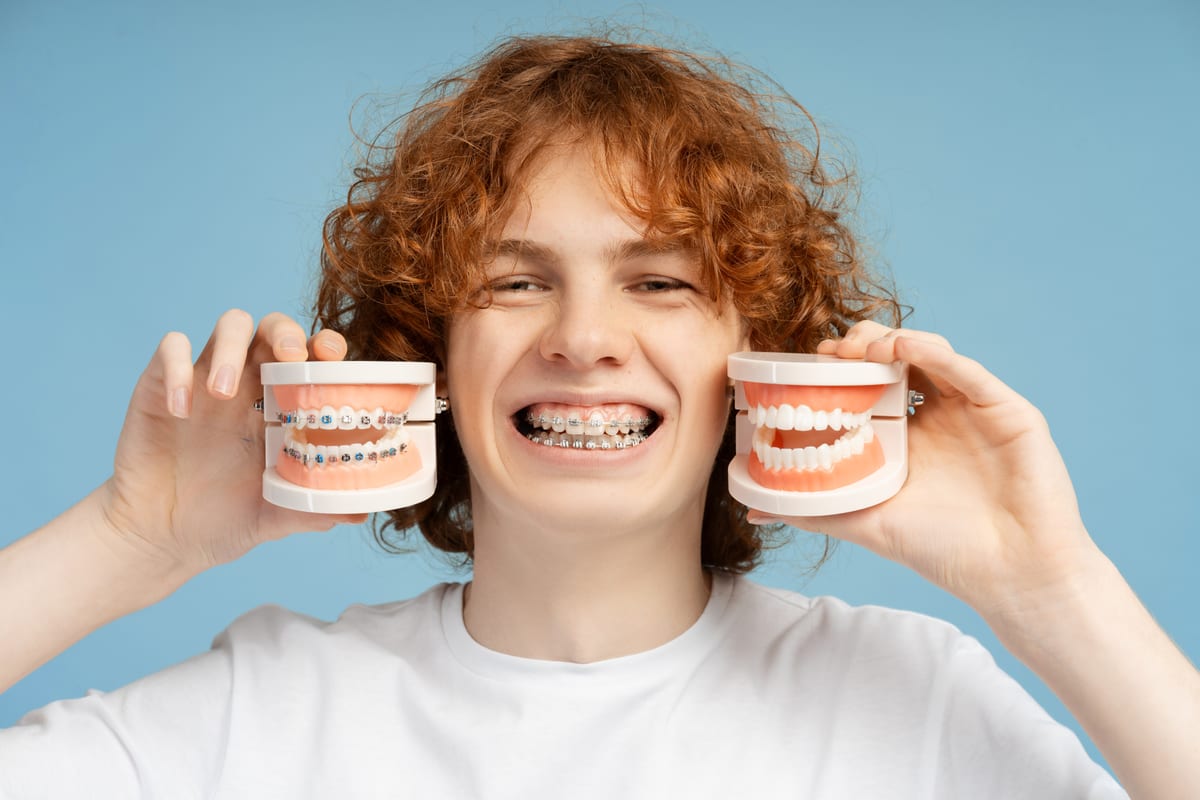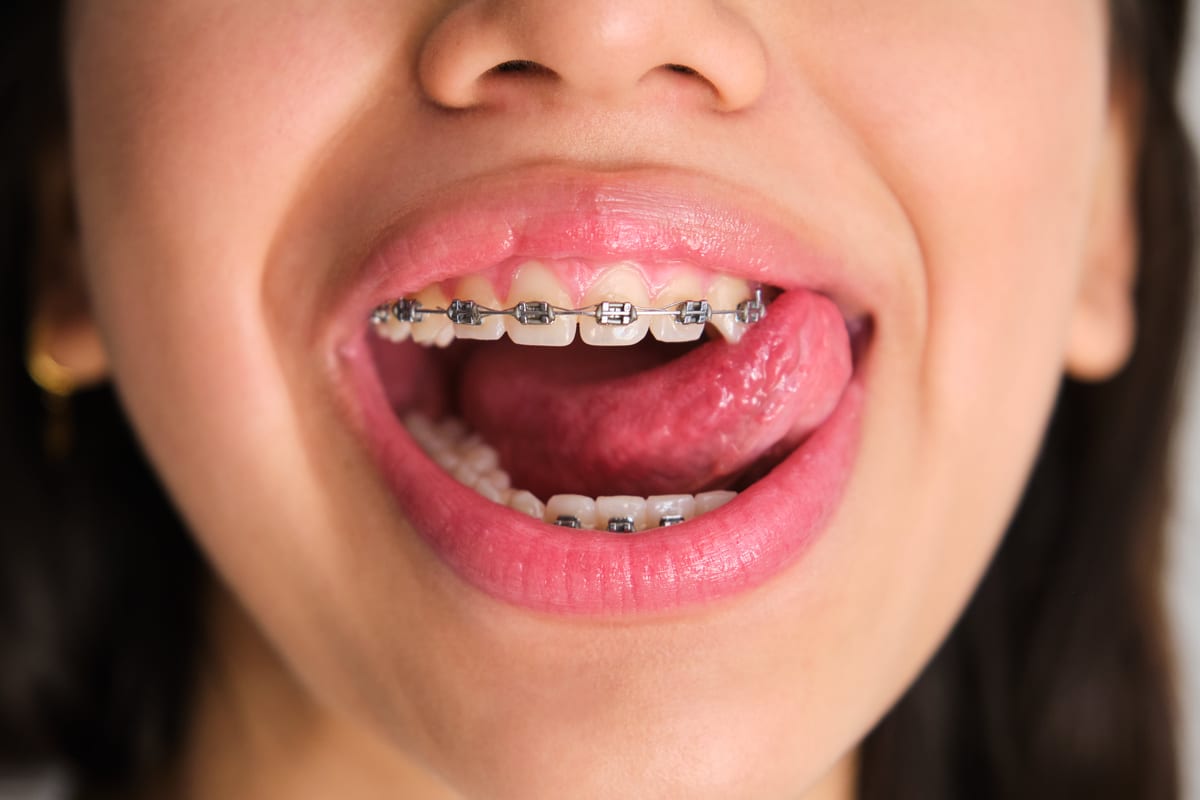
The best braces for adults depend on your oral health, bite alignment, lifestyle, and orthodontic goals. Every appliance is designed to move teeth safely and predictably, but some options are better suited for certain cases than others.
Today, adults represent a growing share of orthodontic patients. According to the American Association of Orthodontists (AAO), 1 in 3 orthodontic patients is now over 18, highlighting the growing demand for adult orthodontic care.
Traditional Metal Braces
Metal braces remain the gold standard for treating complex orthodontic problems.
They are highly effective for correcting:
- Severe crowding
- Large gaps
- Overbites
- Underbites
- Crossbites
- Open bites
- Significant tooth rotation
Because metal braces stay attached to the teeth throughout treatment, they work continuously and do not rely on patient compliance.
Ceramic Braces
Ceramic braces function like metal braces but use tooth-colored brackets that blend with natural teeth.
They are an excellent option for adults who want:
- Less visible braces
- Effective treatment for moderate to complex cases
- Continuous tooth movement
Ceramic braces provide treatment outcomes similar to those of metal braces when used appropriately.
Lingual Braces
Lingual braces are bonded to the inside surfaces of the teeth, making them virtually invisible when you smile.
They may be ideal for adults who:
- Frequently speak in public
- Work in professional settings
- Prefer hidden orthodontic treatment
Because lingual braces are customized for each patient, they can effectively treat many complex orthodontic problems.
Clear Aligners
Clear aligners are removable and nearly invisible, making them one of the most popular orthodontic options for adults.
They are commonly recommended for:
- Mild to moderate crowding
- Small gaps
- Mild bite correction
- Orthodontic relapse
Treatment success depends on wearing aligners 20–22 hours each day.
Comfort During Treatment
Adults often ask which braces are the most comfortable.
Each option has a different adjustment period.
Metal Braces
Patients typically experience:
- Mild soreness after adjustments
- Temporary irritation to the lips and cheeks
- Pressure as teeth begin moving
Most discomfort improves within several days.
Ceramic Braces
Ceramic braces exert orthodontic forces similar to those of metal braces.
Many adults find them comfortable after the initial adjustment period.
Because ceramic brackets are slightly larger, some patients notice minor differences during the first few weeks.
Lingual Braces
Lingual braces usually require the longest adjustment period.
Patients may notice:
- Tongue irritation
- Temporary speech changes
- Mild soreness
These symptoms generally improve as the mouth adapts.
Clear Aligners
Many adults appreciate that aligners have smooth plastic surfaces without brackets or wires.
Patients may notice:
- Tightness when changing aligners
- Mild pressure
- Less irritation to cheeks and lips
Appearance Matters
Adults often choose orthodontic treatment that fits comfortably into professional and social settings.
Metal Braces
- Most visible option
- Smaller brackets than previous generations
- Available with colored or clear elastic ties
Ceramic Braces
- Blend naturally with tooth color
- Less noticeable than metal braces
- Popular among working professionals
Lingual Braces
- Hidden behind the teeth
- Virtually invisible during conversation
- Excellent for patients who prioritize aesthetics
Clear Aligners
- Nearly transparent
- Removable
- Difficult for others to notice during everyday activities
Modern orthodontic options have contributed to the rise in adult treatment. According to the American Association of Orthodontists (AAO), adults increasingly seek orthodontic care because today’s appliances are more discreet and better suited to professional lifestyles.
Oral Hygiene
Keeping your teeth clean is essential throughout orthodontic treatment.
Metal and Ceramic Braces
Patients should:
- Brush after meals
- Floss daily using floss threaders or water flossers
- Attend regular dental cleanings
Lingual Braces
Cleaning around brackets requires additional care because they are attached to the tongue side of the teeth.
Interdental brushes and water flossers can improve plaque removal.
Clear Aligners
Many adults appreciate that aligners are removable.
This allows patients to:
- Brush normally
- Floss normally
- Clean every tooth more effectively
Good oral hygiene helps reduce the risk of cavities and gum disease during orthodontic treatment.
Which Braces Fit Your Lifestyle?
Metal Braces May Be Best If You:
- Need a comprehensive bite correction
- Have significant crowding
- Prefer a fixed appliance
Ceramic Braces May Be Best If You:
- Want a less noticeable option
- Need treatment for moderate or complex cases
- Prefer fixed braces
Lingual Braces May Be Best If You:
- Want braces hidden behind your teeth
- Frequently speak in public
- Value maximum discretion
Clear Aligners May Be Best If You:
- Prefer removable treatment
- Want flexibility while eating
- Can wear aligners consistently
- Have mild to moderate orthodontic needs
Long-Term Oral Health Benefits of Adult Orthodontic Treatment
While many adults begin orthodontic treatment to improve their smile, properly aligned teeth also support better oral health. Straightening teeth can make daily brushing and flossing easier, help distribute biting forces more evenly, and reduce excessive wear caused by an uneven bite.
Adults who complete orthodontic treatment may experience several long-term benefits, including:
- Easier plaque removal between teeth
- Improved gum health with consistent oral hygiene
- Better chewing efficiency
- Reduced stress on certain teeth
- More balanced bite alignment
- Improved smile confidence
Orthodontic treatment in Broken Arrow should be combined with regular dental checkups and good home care to maintain these benefits.
How to Choose the Right Braces
The best braces for one adult may not be the best choice for another. Your orthodontist will evaluate several factors before recommending a treatment plan.
Your Bite
Patients with severe overbites, underbites, crossbites, or open bites may benefit from fixed braces that provide greater control over tooth movement.
Tooth Alignment
The amount of crowding, spacing, and tooth rotation influences which orthodontic appliance will provide the most predictable results.
Lifestyle
Consider your daily routine:
- Do you attend business meetings?
- Do you travel frequently?
- Do you play sports?
- Do you prefer removable or fixed appliances?
Your answers can help determine whether clear aligners or braces are a better fit.
Oral Hygiene Habits
Patients who maintain excellent oral hygiene are often good candidates for any orthodontic option. Those who choose fixed braces should be prepared to spend additional time cleaning around brackets and wires.
Personal Goals
Some adults prioritize:
- Faster treatment
- Maximum discretion
- Simpler maintenance
- Correcting complex bite issues
Discussing your goals with your local Broken Arrow orthodontist will help identify the most appropriate treatment.
Tips for Adults Starting Orthodontic Treatment
Beginning treatment is an exciting step toward a healthier smile. These habits can help you achieve the best possible results:
- Wear aligners or elastics exactly as instructed.
- Brush twice a day with fluoride toothpaste.
- Floss daily to remove plaque between teeth.
- Limit sugary snacks and beverages.
- Avoid chewing on hard objects such as ice or pens.
- Keep all scheduled orthodontic appointments.
- Wear a mouthguard during contact sports if recommended.
- Contact your orthodontist if a bracket becomes loose or an aligner no longer fits properly.
Consistency throughout treatment plays an important role in achieving successful results.
Why More Adults Are Choosing Orthodontic Care
Adult orthodontics has become increasingly common because modern treatment options are more comfortable, discreet, and effective than ever before.
Today’s adults often seek orthodontic treatment because they want to:
- Improve their smile for personal confidence
- Enhance their professional appearance
- Correct bite problems that affect daily function
- Improve oral hygiene by reducing crowding
- Address shifting teeth that occurred after childhood orthodontic treatment
With options ranging from traditional and ceramic braces to lingual braces and clear aligners, adults have more choices than ever to suit their individual needs.
Conclusion
Choosing the best type of braces as an adult depends on your orthodontic needs, lifestyle, and treatment goals. Traditional metal braces remain one of the most effective solutions for complex orthodontic problems. Ceramic braces provide similar treatment with a more discreet appearance, while lingual braces are hidden behind the teeth for maximum aesthetics. Clear aligners offer flexibility and convenience for many adults with mild to moderate orthodontic concerns.
The ideal treatment is not simply the least noticeable option—it is the one that can safely and effectively correct your bite while fitting your daily routine. A comprehensive orthodontic evaluation allows your provider to assess your teeth, jaw alignment, and oral health before recommending the most appropriate treatment plan.
Investing in orthodontic care today can lead to a healthier bite, improved oral hygiene, greater confidence, and long-lasting smile improvements for years to come.
Frequently Asked Questions
1. Which braces are the least noticeable for adults?
Clear aligners are nearly invisible and among the most discreet orthodontic options. Ceramic braces also blend with the natural color of your teeth, while lingual braces are attached to the back of the teeth and are generally hidden from view.
2. Are braces effective for adults?
Yes. Adults of many ages can complete orthodontic treatment. Healthy teeth and gums are generally more important than age when determining candidacy.
3. Can braces improve chewing and bite function?
Yes. Correcting tooth alignment and bite relationships can improve chewing efficiency and help distribute biting forces more evenly across the teeth.
4. How should adults care for their braces?
Maintain good oral hygiene by brushing twice daily, flossing every day, avoiding foods that may damage braces, and attending regular orthodontic and dental appointments.
5. How do I know which braces are right for me?
An orthodontic consultation is the best way to determine the right treatment. Your orthodontist will evaluate your bite, tooth alignment, oral health, lifestyle, and smile goals before recommending a personalized treatment plan.